
Mithila makhana, from Darbhanga and Madhubani.
Mithila is the makhana belt of north Bihar. Our lots are sourced from Darbhanga and Madhubani, districts covered by the Mithila Makhana GI, and graded one size per lot.
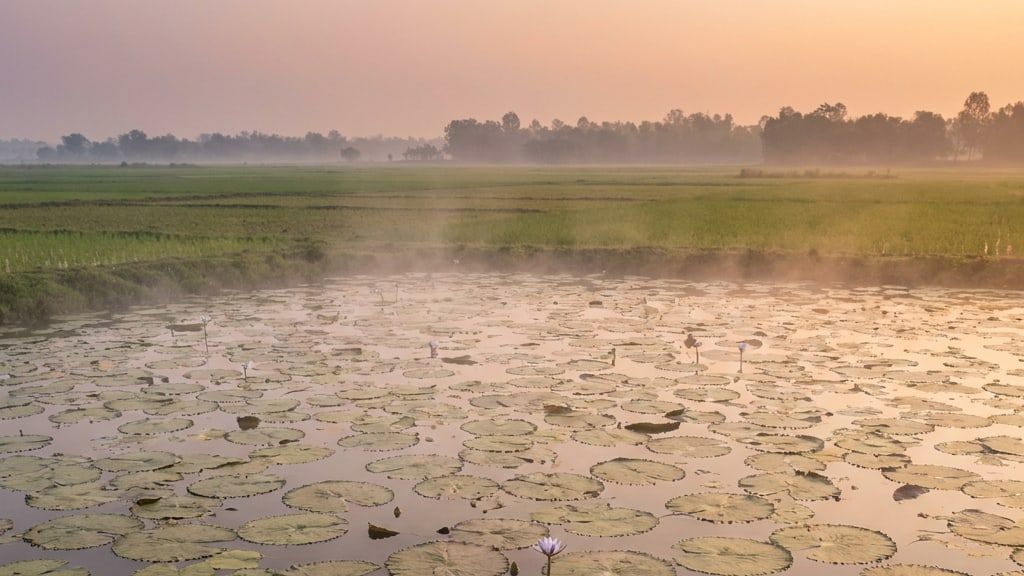
- From the Mithila Makhana GI region
- Pond-grown in Darbhanga and Madhubani
- Harvested August to October
- Graded by suta, measured in mm
Origin facts, each with its source in our research file.
What the Mithila Makhana GI is.
Mithila Makhana is a registered geographical indication for agricultural goods from Bihar (GI application no. 696), notified on 16 August 2022.
A GI names a region, not a supplier. It is held collectively for the area’s producers, so it tells you where makhana was grown; it says nothing about a particular lot’s size, moisture or cleanliness. That is what each lot’s certificate of analysis is for.
Where the crop grows.
The National Makhana Board estimates that Bihar grows more than 90 percent of India’s makhana, and names Darbhanga and Madhubani first among its major producing districts.
Darbhanga and Madhubani mostly grow makhana in ponds. Further east, in Purnia and Katihar, much of the crop has moved to low-lying fields.
Darbhanga.
Our sourcing desk is based in Darbhanga, home to ICAR’s Research Centre for Makhana. The district page covers its ponds, its research base and its makhana market.
Madhubani.
District fisheries records cited by ICAR-RCER counted 2,111 ponds in Madhubani covering about 2,097 hectares, more than four in five of them government-owned, and most of the district’s makhana is grown in them.
Jhanjharpur Mandi in Madhubani is one of the eight central markets for popped makhana in Bihar studied by the Institute for Social and Economic Change in 2025.
From pond to graded lot.
Seed is sown in the ponds over winter and collected from the pond bed between August and October. It is then dried, roasted and popped into the white kernel the trade calls phool makhana. Outside the harvest months, the market runs on stored popped stock.
The trade sizes kernels in suta, a unit of about 3.175 mm. We measure each lot in millimetres, pack it as one grade and report the result on its certificate.
Questions about Mithila makhana.
Does the GI tag mean a better grade of makhana?
No. The GI identifies the region the makhana comes from. Grade is set by kernel size and checked lot by lot, which is why every lot carries a certificate of analysis.
What is phool makhana?
Phool makhana is the everyday name for popped makhana, the white kernel sold for snacking and cooking. It is what we supply, graded by size.
What is the botanical name of makhana?
Euryale ferox, an aquatic plant of the water-lily family. In English the popped seed is sold as fox nut, and sometimes under the trade name lotus seeds.
When is fresh crop available from Mithila?
Seed is collected from August to October and popped through the season. For the rest of the year, supply comes from stored popped stock, so tell us your dispatch month when you ask for a quote.
Ask for a grade from Mithila.
Leave your details. We’ll confirm the grade, current rate and dispatch options by call or WhatsApp.