Makhana vs fox nut vs lotus seed: what the names mean
Makhana is sold under at least half a dozen names. Most of them describe the same seed. One of them, “lotus seed”, belongs botanically to a different plant. If you are writing a specification, a purchase order or a product label, it helps to know which is which.
Makhana is the seed of Euryale ferox
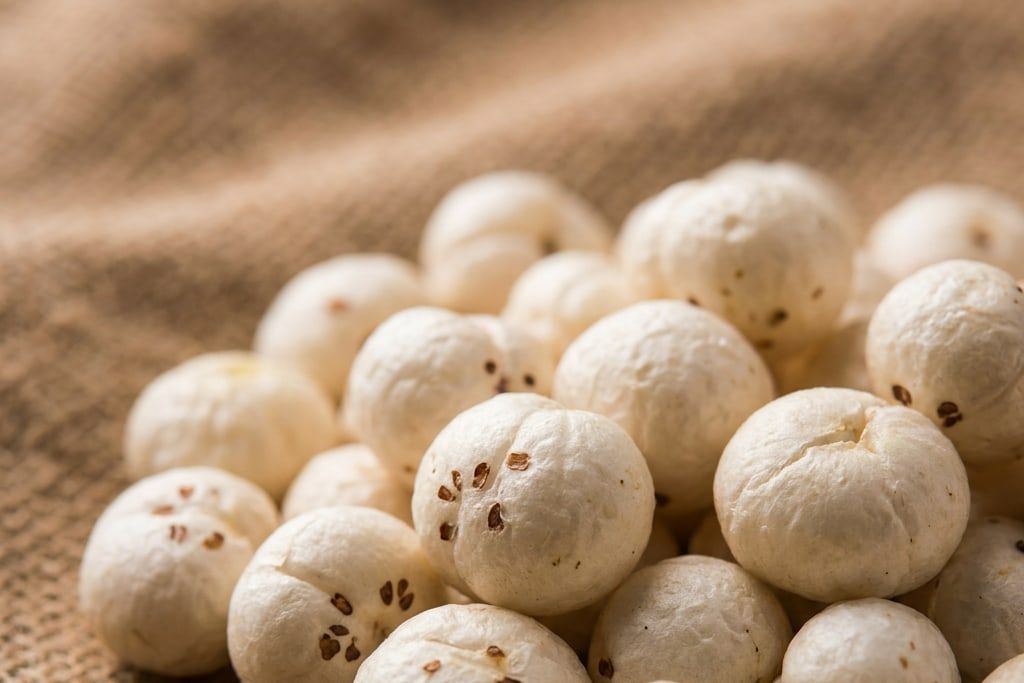
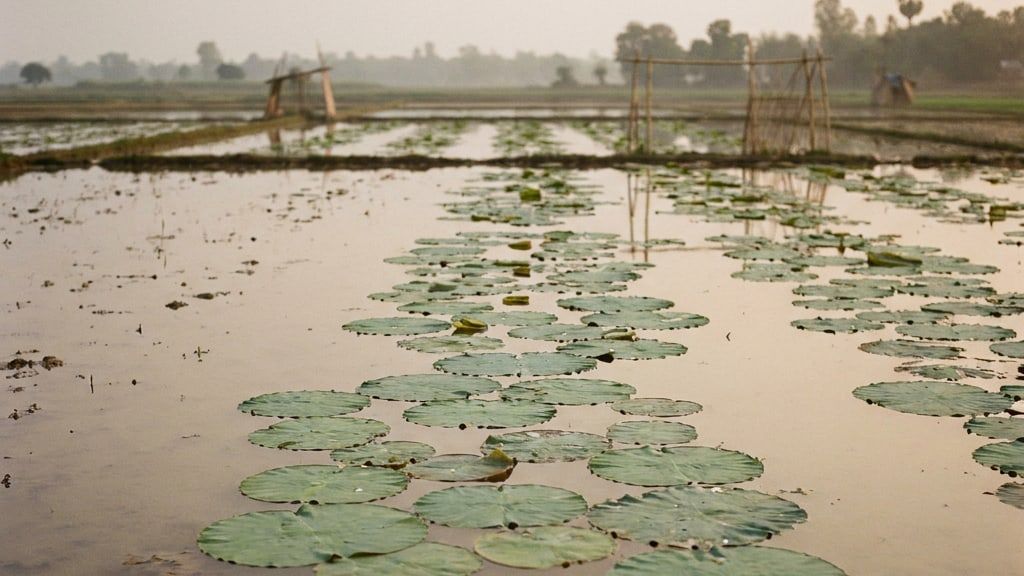
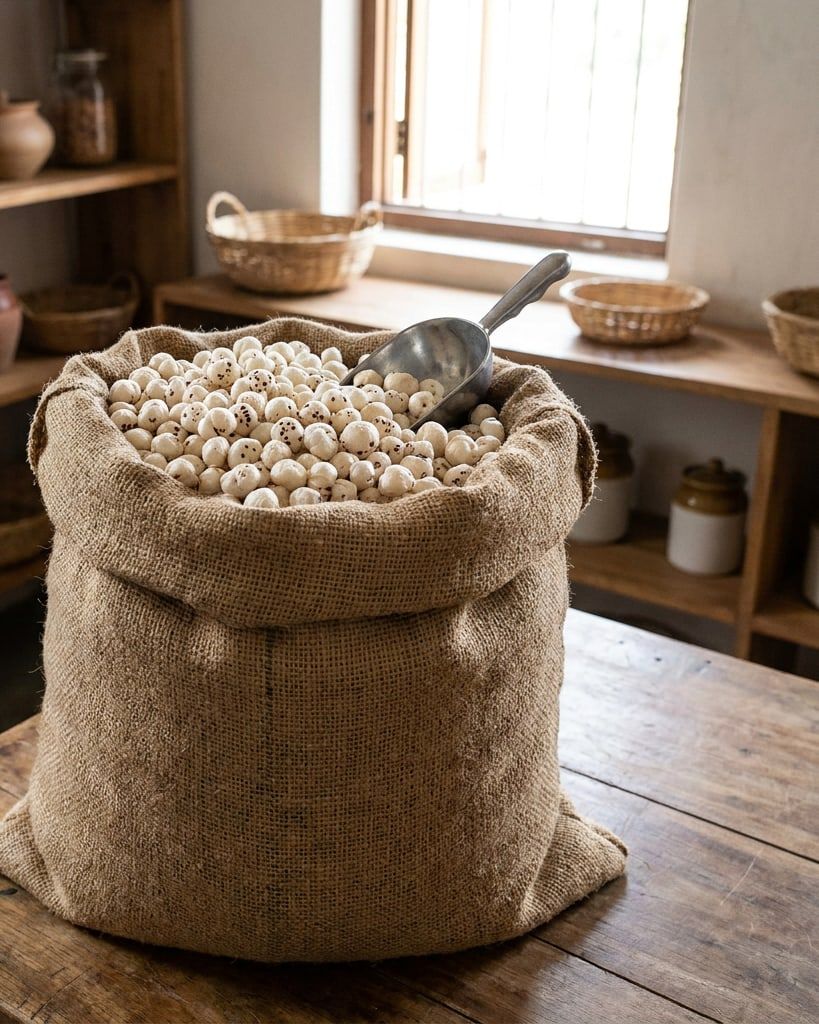
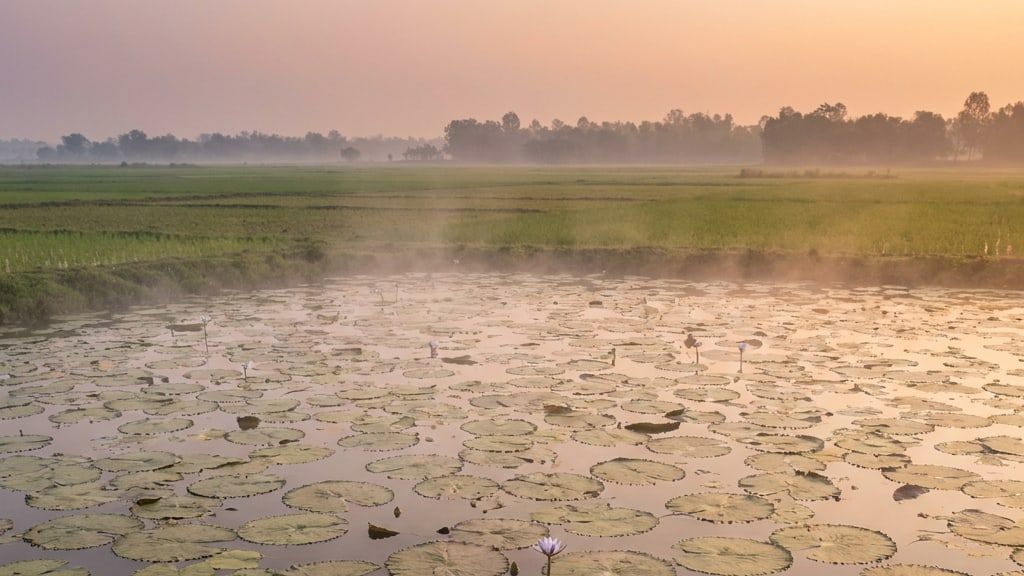
Makhana is the popped seed of Euryale ferox Salisb., a prickly water lily in the family Nymphaeaceae. It grows in ponds and flooded fields, and most of India’s crop comes from north Bihar. Growers harvest the seed from the pond bed; it is then roasted and popped into the light, white kernel the trade sells as makhana.
The European Union uses the botanical name too: in 2023 it authorised roasted and popped Euryale ferox kernels as a traditional food from a third country.
The names, one by one
| Name | What it refers to |
|---|---|
| Makhana | The Indian trade name for the popped seed of Euryale ferox. |
| Phool makhana | The same popped kernel. Phool means flower in Hindi. |
| Guri | The raw, unpopped seed, before roasting and popping. |
| Fox nut | The usual English name for makhana. APEDA’s monthly dashboard is titled “Makhana (Fox-Nut)”. |
| Gorgon nut | Another English name, from the plant’s older common name, the gorgon plant. |
| Prickly water lily seed | A descriptive name, after the plant’s spiny leaves and stems. |
| Lotus seed | A trade name some sellers outside India use for popped makhana. Botanically, lotus seed is the seed of a different plant. |
| Mithila makhana | Makhana from Mithila, the makhana belt of north Bihar. It names a region, not a grade. |
Why “lotus seed” is not makhana
The lotus is Nelumbo nucifera, in the family Nelumbonaceae. Makhana’s plant, Euryale ferox, is in the water lily family, Nymphaeaceae. The two are not close relatives: botanists place them in different orders, Proteales for the lotus and Nymphaeales for the water lilies.
They are easy to confuse. Both grow in still water, both have large round leaves, and both have edible seeds. Some brands abroad sell popped makhana as “popped lotus seeds”. That is a marketing name, not a botanical one, and “lotus seed” in a supplier’s catalogue can mean either plant.
Even our own name borrows the image: Kamalkund means “lotus pond”.
What to write on a specification
A name on its own does not fix the product. On a specification or purchase order, write:
- The product and the species: popped makhana (fox nut), Euryale ferox Salisb.
- The grade: a millimetre band and a suta name, for example 15–18 mm (5 suta). See our grades and what suta means.
- The origin: the country, state and districts. Our makhana is sourced from Darbhanga and Madhubani, in the districts covered by the Mithila Makhana GI. Read more about Mithila makhana.
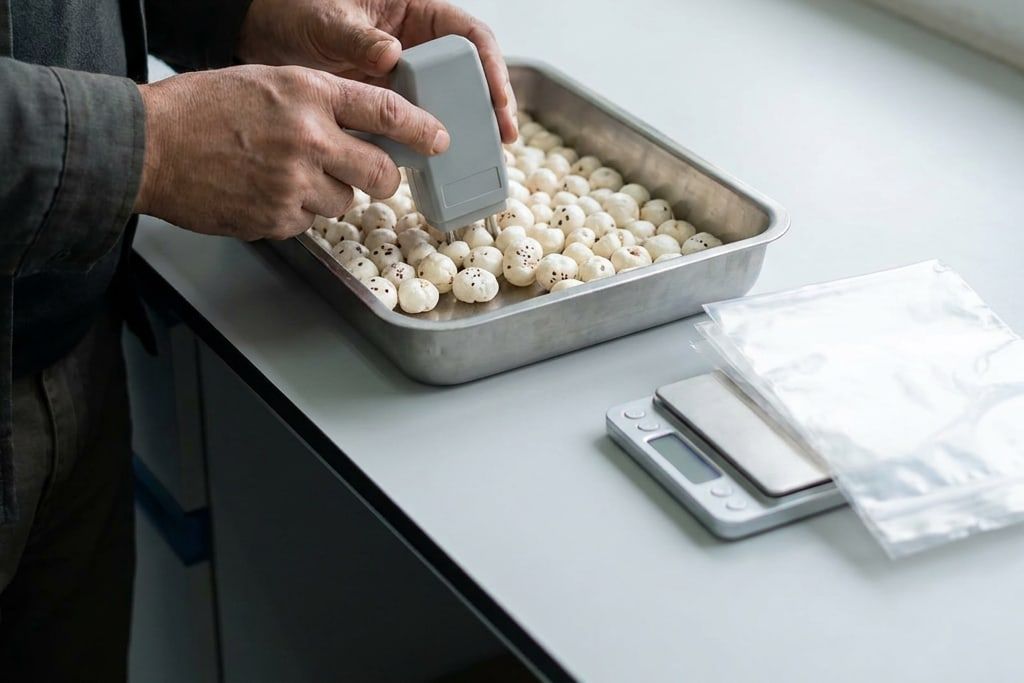
- The limits: moisture, unpopped, broken and foreign matter, and the laboratory tests that apply. Our guide to checking makhana quality sets them out.
If you sell under the name “lotus seeds”, keep the species on your own specification and certificate of analysis, so that your supplier, your laboratory and your customs broker are all describing the same product. Importers should also read how to import makhana from India.
Sources
- Plants of the World Online, Royal Botanic Gardens, Kew: Euryale ferox Salisb., Nymphaeaceae. Record
- Plants of the World Online, Royal Botanic Gardens, Kew: Nelumbo nucifera Gaertn., Nelumbonaceae. Record
- GBIF Backbone Taxonomy: order Nymphaeales for Euryale ferox, order Proteales for Nelumbo nucifera. Euryale ferox, Nelumbo nucifera
- Commission Implementing Regulation (EU) 2023/652, Official Journal L 81, 21 March 2023: roasted and popped Euryale ferox kernels authorised as a traditional food from a third country. PDF
- APEDA Market Intelligence Cell, makhana dashboard, May 2026 edition, titled “Makhana (Fox-Nut)”. PDF
- Wikipedia, Euryale ferox: common names including gorgon plant and prickly water lily. Article